

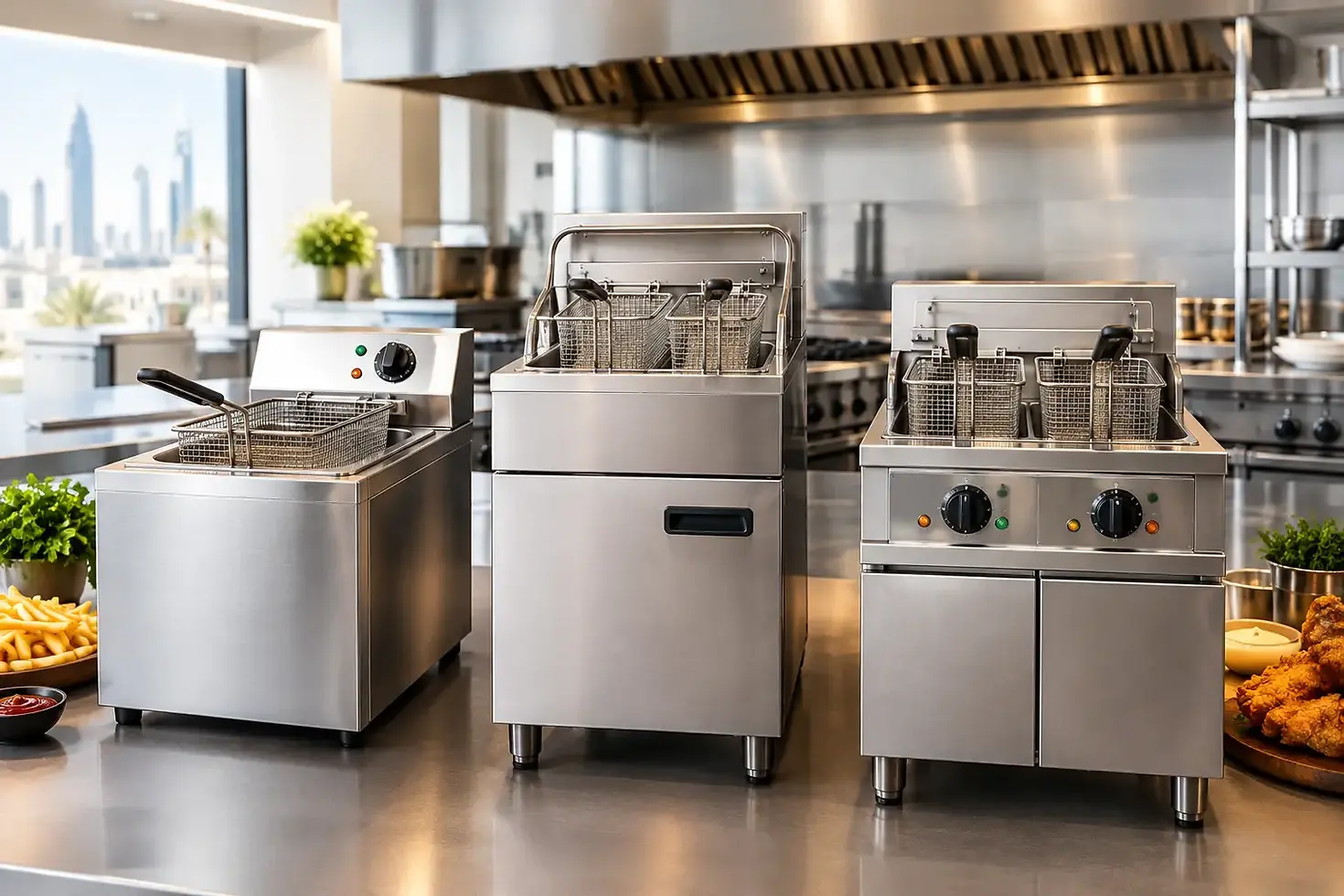
Commercial Fryer Comparison for UAE Kitchens
A fryer that looks right on a specification sheet can still be the wrong fit for a busy kitchen. A compact café may need fast startup and a small footprint, while a hotel banquet operation needs sustained output across long service periods. This fryer comparison is built for operators who need to match fryer type, capacity, energy source, and workflow to the menu they actually serve.
Start a fryer comparison with the menu
The first question is not which fryer has the largest tank. It is what will go into the oil, how often, and at what time of day. French fries, breaded chicken, seafood, dough products, and mixed snack menus all place different demands on a commercial fryer.
A kitchen serving one core item in high volume can prioritize production capacity and recovery. A restaurant with several fried menu items may need separate frypots to maintain flavor quality and organize output. For example, a dedicated fryer for fries helps maintain a consistent result when the kitchen also produces breaded products or seafood.
Consider portion size as well as daily volume. Large batch frying is not always the most efficient route. If orders arrive steadily throughout a meal period, recovery rate and basket configuration can matter more than a very large oil capacity. A correctly sized unit supports controlled production, easier staff routines, and consistent plate presentation.
Identify your peak service demand
Procurement teams should map the busiest 15 to 30 minutes of service. Estimate how many portions must be produced in that window, then assess how many baskets and frypots are required to keep tickets moving. This approach gives a more useful answer than choosing equipment based only on total covers per day.
In Dubai and across the UAE, many foodservice operations also manage long operating hours, delivery demand, and seasonal surges. Fryer capacity should support those conditions without taking unnecessary space from refrigeration, prep, or the cooking line.
Gas vs. electric commercial fryers
Gas and electric fryers can both deliver strong commercial performance. The better choice depends on the building services, kitchen layout, operating pattern, and the type of output required.
Gas fryers are often selected for high-volume cooking lines where a powerful heat source and quick recovery are priorities. They are well suited to operations with established gas infrastructure and a menu that requires continuous frying. The final selection should account for ventilation coordination, clearance requirements, and the wider cooking line layout.
Electric fryers are a practical option where electrical service is the preferred utility or where the kitchen design benefits from a compact, controlled setup. They can suit cafés, food courts, hotels, and specialty concepts that value accurate temperature management and a straightforward installation path. Electric models can also work well in modular cooking lines where equipment placement may change as the menu develops.
Neither option is automatically better. A gas fryer may be the right answer for a high-output central kitchen, while an electric fryer may better support a smaller restaurant or a location with specific utility limitations. The decision should be made with the kitchen’s available power, extraction design, menu, and service pattern in view.
Frypot design: open-pot, tube, and flat-bottom models
The frypot design affects oil handling, cleaning routines, product suitability, and usable frying area. It deserves as much attention as the external size of the fryer.
Open-pot fryers
Open-pot fryers have an unobstructed frypot, creating a broad cooking zone that is easy to access. They are commonly chosen for products that benefit from a clear fry area, such as fries, breaded chicken, and other basket-fried menu items. Their open design can simplify cleaning and help staff manage frequent production during busy shifts.
Tube fryers
Tube fryers use heat-transfer tubes running through the frypot. Food particles can settle beneath the tubes, away from the active frying area. This design can suit breaded items and high-volume applications where crumb management is an everyday operational consideration. Teams should still follow a disciplined filtration and cleaning schedule to protect oil performance and product consistency.
Flat-bottom fryers
Flat-bottom fryers are often used for delicate or specialty foods that may not be suitable for conventional baskets. They can support items such as donuts, pastries, or products that need to float freely. They are not a replacement for every general-purpose fryer, but they can be the correct dedicated choice for bakery and dessert operations.
Countertop or floor model: choose by workflow, not appearance
Countertop fryers are useful where space is limited or fried items are a smaller part of the menu. They can fit café counters, compact prep areas, kiosks, and specialty stations. Their capacity should be matched carefully to service demand, especially when delivery orders rise at lunch or late evening.
Floor-standing fryers are designed for higher production needs and are commonly installed in restaurant, hotel, catering, and institutional kitchens. They offer greater oil capacity, larger baskets, and stronger support for sustained service. Twin-frypot floor models are particularly useful when the operation needs menu separation or wants to run different cooking temperatures at the same time.
For a new kitchen project in the UAE, fryer positioning should be planned early. The unit must work with the exhaust hood, fire safety requirements, drainage route, electrical or gas connection, and adjacent landing space. A fryer should also sit close enough to the prep and pass areas to support speed, but not disrupt the movement of staff through the line.
Capacity and recovery rate matter more than tank size alone
Oil capacity tells part of the story, but recovery rate determines how quickly the fryer returns to its target temperature after food is loaded. A fryer with suitable recovery maintains a steady cooking environment during high demand, supporting consistent color, texture, and cook times.
Undersized equipment can cause teams to overload baskets or extend cooking cycles during the rush. Oversized equipment, on the other hand, may not be the best use of utility capacity or floor space for a lower-volume concept. The right balance comes from matching the fryer to the heaviest realistic service window rather than the quietest part of the day.
Ask for production guidance based on your actual products. Frozen fries, fresh-cut potatoes, breaded chicken, and seafood all behave differently in the frypot. Basket size, load weight, and target holding time should be considered together.
Oil management, filtration, and daily maintenance
Oil is a working ingredient, not just a utility inside the fryer. Its condition affects food quality, kitchen cleanliness, and operational control. A fryer with an integrated filtration system can make routine oil management more practical for busy teams, particularly in multi-shift operations.
When comparing models, review how the fryer supports filtering, draining, and cleaning. Ensure staff have safe access to the controls and that the planned layout provides room for routine service procedures. A clear maintenance routine should cover filtering frequency, frypot cleaning, basket inspection, thermostat checks, and safe handling practices.
Useful questions for a commercial fryer comparison include:
Which menu items will have dedicated frypots?
What output is required during the busiest service period?
Is gas or electric service best suited to the site?
Does the layout allow safe drainage, filtration, and cleaning access?
Will the unit integrate correctly with ventilation and fire safety systems?
Where fryer planning fits in a complete kitchen project
A fryer performs best when it is selected as part of the full cooking line, not as an isolated purchase. The surrounding equipment affects every shift: refrigerated storage determines how product reaches the station, prep tables support portioning, landing areas protect workflow, and holding equipment helps maintain service speed.
For restaurants, hotels, cafeterias, and catering facilities in Dubai, a coordinated equipment plan can prevent awkward utility changes and last-minute layout adjustments. WAF Kitchen supports commercial kitchen projects from equipment selection and layout planning through installation, commissioning, customized stainless steel work, and ongoing maintenance support.
Choose the fryer that gives your team enough production capacity for the rush, clear routines for oil care, and a position in the kitchen that makes every basket easier to manage. That is where dependable fried food service begins.

Comments